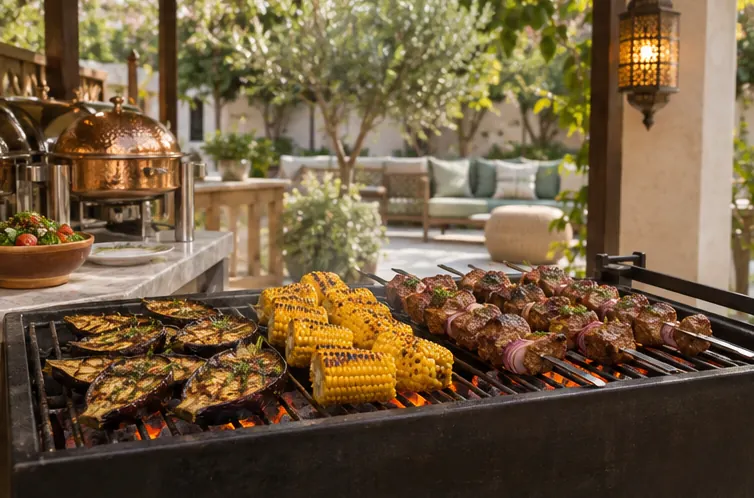
Begin with where the food will be cooked. Springbok’s Abu Dhabi braai example includes steaks, lamb chops, chicken and burgers cooked for a group of around twenty. Its lamb spit example is designed for about twenty-five. Both specify sides, cooks, servers and cleanup. The price is attached to the whole example menu, so a change in headcount needs a new quote.
Cater Inc. offers a different layout, with tandoor or charcoal cooking as part of an Indian and pan-Asian event menu. Its Classic rate applies to food, with a minimum headcount and spend. Ask for setup, counter chefs and VAT on separate lines. For a friend hosting a garden party, that breakdown makes it easier to see the cost of cooking on site rather than receiving ready-to-serve trays.
Think through the order of service before choosing meat by weight. A lamb spit yields a shared course at a particular time, while a grill can release batches of different cuts. Tell the team when guests will arrive, when the main meal should begin and whether people will sit together. Ask what the first arrivals can eat before the main meat is carved. Agree on the carving position so the crew has space to portion the meat away from the queue.
Shamiat offers Syrian-style live grill parties. MADO can combine Turkish meze with a live station, while Baguette Catering takes bespoke event briefs. Discuss the position of each station with the venue, including the route for equipment and staff, the permitted fuel and where the team can clean down. Specify any meat-free dishes and how you want them handled before service begins.
How we check companies
 Cater